
Mole Control in Cardiff
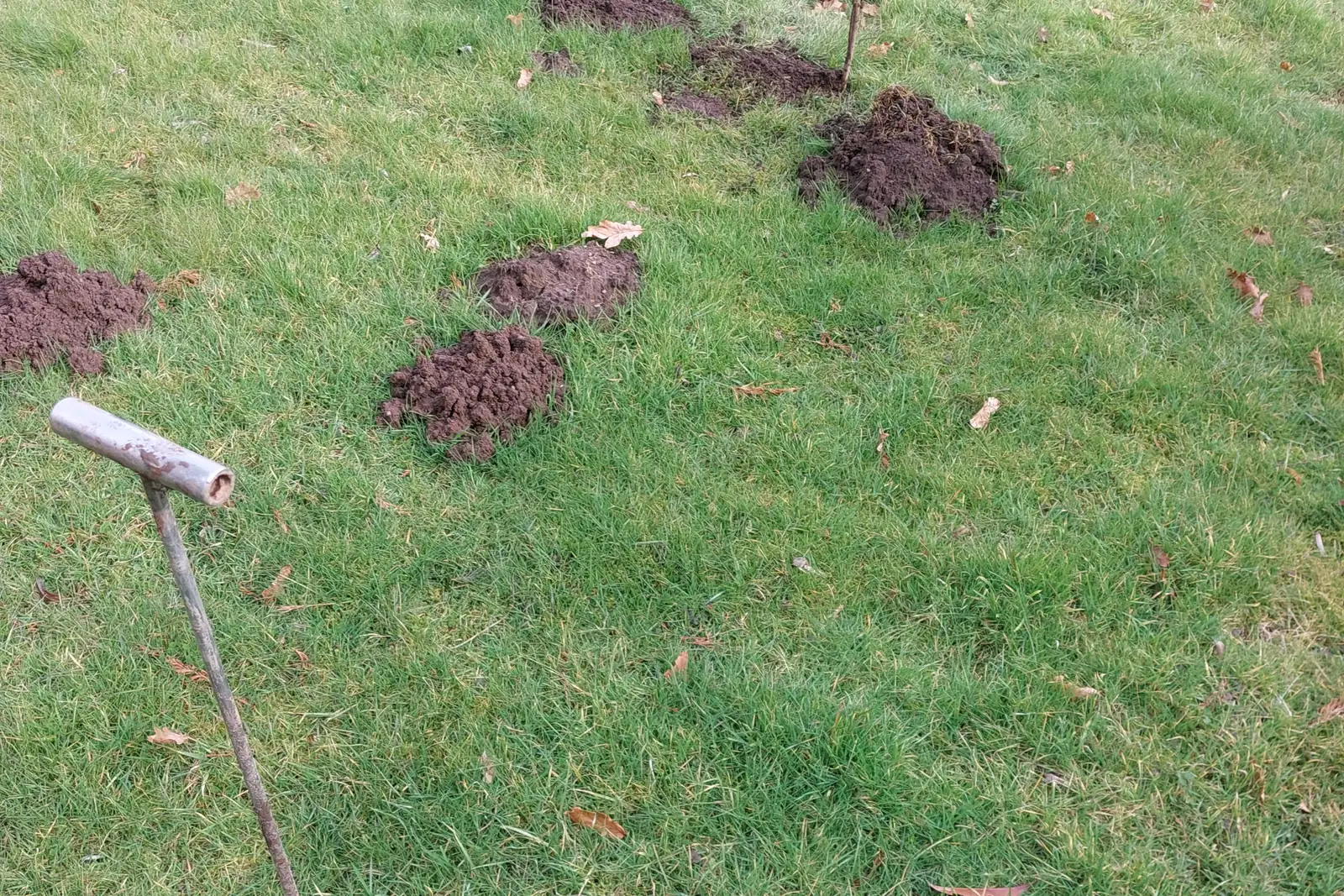
A mole announces itself with fresh molehills: neat heaps of soil that appear overnight and multiply across a lawn you’ve spent years getting right. Underfoot, the ground feels soft and ridged where tunnels run just below the surface. More often than not it’s a single animal doing all of it, but the damage across lawns, gardens and paddocks (through Cowbridge, Creigiau and the wider Vale of Glamorgan especially) can be considerable.
People still search for a “mole catcher”, and it’s the accurate word. This is trapping work, done the traditional way, and the skill hasn’t changed in a century: reading the ground correctly.
The job at a glance
- Visits: trapping is checked and reset over days; some checks find empty traps, and we are straight about that.
- What happens: traditional traps set in the active runs, placed by reading the ground.
- Price: quoted for the lawn or paddock in question; quotes are free.
Mole control in Cardiff: trapping, done properly
Mole control is trapping, and it is always a minimum of two visits: one to set, one to check and clear. There’s no way around that: traps go into the active runs on the first visit, and you can’t know they’ve done their work until they’re checked. Anyone promising a guaranteed one-visit fix isn’t being straight with you.
The craft is in telling the working tunnels from the abandoned ones: probing the runs between heaps, finding the deep travel routes the mole actually uses several times a day, and siting the traps precisely there. Get that right and it’s a clean, humane job. Get it wrong and you’re trapping empty corridors while fresh heaps appear behind you.
Where more than one mole is active, or the ground is extensive (a paddock rather than a lawn), it may take an extra visit or two, and we’ll tell you that up front after walking the ground.
And a word about the checks: sometimes a follow-up finds the traps empty. Moles can sense disturbance in a run (they’ll backfill a trapped tunnel or trigger a trap without being caught) and when that happens we adjust the placements and go again. It’s the nature of trapping wild animals, not a failure of it, and we’d rather warn you now than surprise you then.
What mole control in Cardiff costs
What a mole job costs follows the ground: a single lawn is one thing, a paddock with several moles working it is another. Trapping is always a minimum of two visits (one to set, one to check and clear), occasionally more where the ground is large. We’ll walk it on the first look and confirm the price by text before we attend. Quotes cost nothing.
Common questions about moles
Why can’t it be done in one visit?
Because the traps have to be set in the active runs and then checked. One visit to set, one to check and clear: that’s the honest minimum, and occasionally it takes more. An empty trap on the check visit means the mole sensed something, so we reset smarter and go again.
Do those sonic mole repellers work?
In our experience, not reliably. Moles get used to them, and we’re regularly called to lawns with a repeller buzzing away in the middle of fresh heaps. Trapping in the right runs is what actually clears a mole.
How many moles am I dealing with?
Usually fewer than the lawn suggests: one busy mole can throw up a dozen heaps in a week. Reading the runs on the first visit tells us whether it’s a loner or company, and we’ll price the plan accordingly.
Will my lawn recover?
Yes, and quicker than you’d expect. Once the mole’s gone, level the heaps, firm the ground and reseed the bare patches. By the following season most lawns show no trace.
Do you cover paddocks and larger ground?
Yes: lawns, gardens, paddocks and pony fields across Cardiff and the Vale. Larger ground usually means more traps and an extra visit; we’ll walk it first and quote accordingly.
Related: wildlife management in Cardiff · fox problems
Molehills taking over the lawn?
Call us and we’ll come and read the ground, then tell you exactly what it needs.
Call us on 07307 190055