
Wasp Nest Removal in Cardiff
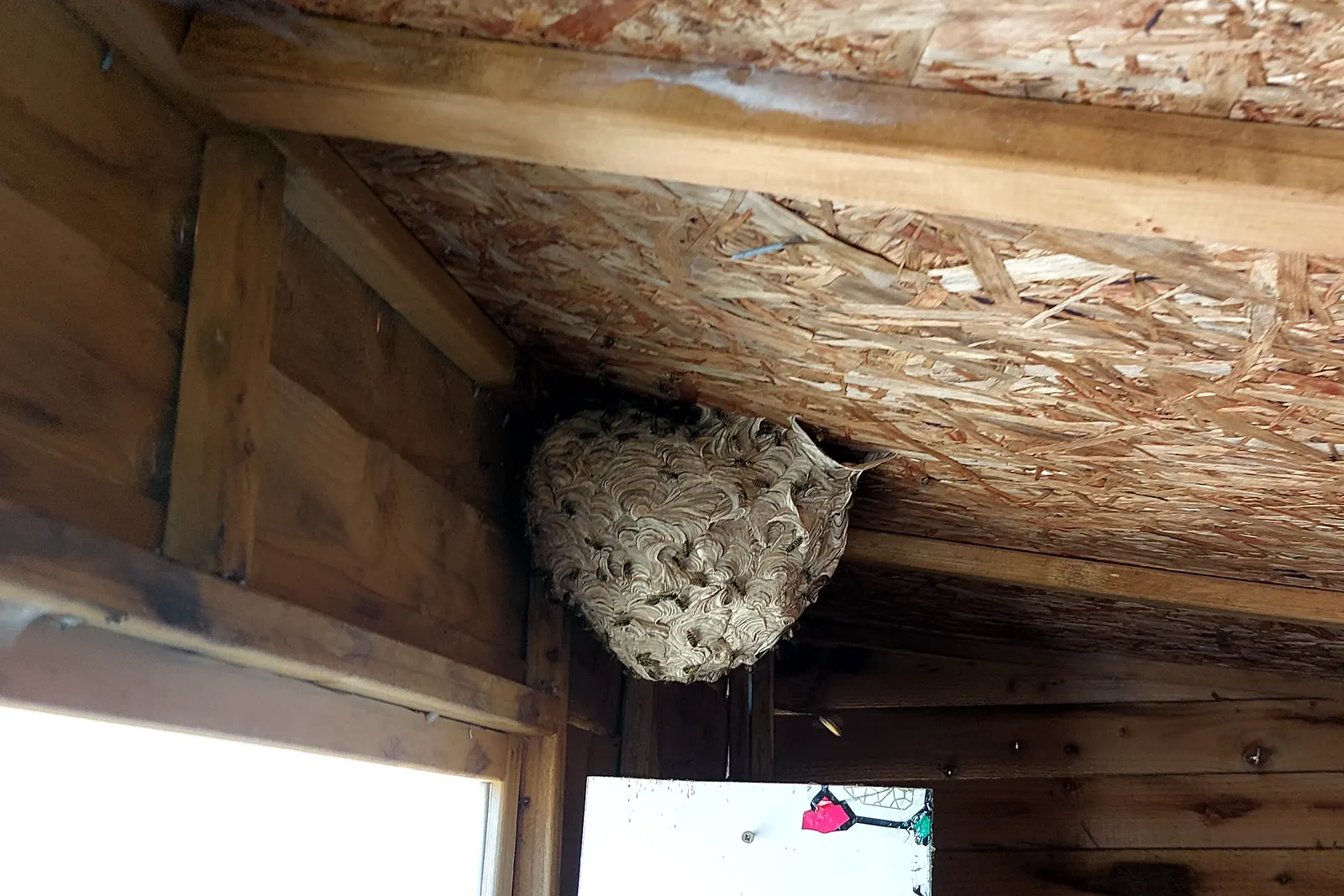
Wasps get busy from midsummer onwards, and a nest that was a golf ball in June can be the size of a football by August. The giveaway is a steady, purposeful stream of wasps in and out of a single point: a gap under the eaves, an airbrick, a shed roof, behind the fascia, or a hole in the ground. That two-way traffic means a nest, not just passing wasps after your lunch.
We treat wasp nests across Cardiff all season (lofts in Whitchurch, eaves in Radyr, garden nests out in Lisvane), and hornets too, which build the same way and are handled on the same basis. The treatment itself is usually quick, and we don’t just treat and disappear: where the insecticide used calls for it, we come back and remove the treated nest safely.
The job at a glance
- Visits: one treatment visit; a follow-up only where the insecticide used has to come out afterwards.
- Timing: nest treatments are usually quick to fit into the round; you’ll get a real time on the phone, not a promise we can’t keep.
- Price: quoted per nest and confirmed by text before we set off; quotes are free.
What not to do while you wait
Two things worth knowing before we arrive. First, don’t block the entrance. Sealing the hole sounds sensible, but it forces the wasps to chew a new way out (often into the house), and an agitated nest is far more likely to sting. Second, leave the DIY sprays and home remedies alone. They rarely reach the nest itself, and they make the colony defensive without solving anything. Keep people and pets away from the flight path, and let it be treated properly. If someone in the house is allergic to stings, our guide to which pest problems shouldn’t wait covers what to do until it’s treated.
How the treatment works
The method depends on where the nest sits, and our preference might surprise you. Where a nest hangs free outside a building (in the ground, in a bird box, under a branch) the best treatment is often non-toxic: a drench of plain soapy water, which is remarkably effective against an exposed nest and leaves no insecticide in your garden at all.
Inside a structure it’s a professional insecticide, applied to the nest itself wherever it can be reached. We carry a telescopic wand for nests at height. Treating only the entrance point is the fallback where the nest truly can’t be reached; it works, but it’s slower and it’s the version that most often needs a follow-up visit to finish the job.
What to expect afterwards, a fair warning. An insecticide treatment stirs the nest up. The wasps can be extremely active for several hours, often into the early evening, and even the next day returning foragers mill about, confused by the absence of the guard wasps that usually sit at the entrance. That’s the treatment working, not failing. Keep people and pets away from the flight path for the rest of the day and it passes.
The follow-up, when there is one. Whether a follow-up visit is needed genuinely varies from job to job, and it comes down to the insecticide used. It’s our responsibility to minimise the insecticide left on site after a treatment, so some products mean we come back and remove the treated nest safely; others can be left in place, and when that’s an option it’s actually preferable, because an old nest occupying a void is one less spot for a new queen to build in next spring. Exposed outdoor nests (in the ground, in a bird box, hanging from a roofline or soffit) often need no follow-up at all, especially where the soapy-water treatment leaves nothing behind. We’ll tell you which applies to your nest when we quote.
A note on bees, and one on hornets
We don’t treat bees of any kind. They’re valuable pollinators, and a honeybee swarm is a job for a beekeeper, not an insecticide. If it turns out you have bees rather than wasps, we’ll say so and pass on the number of a company we trust. Swarms, bird-box nests and the other common cases are on our page about bees in Cardiff. Not sure which you’ve got? The wasps or bees guide covers the differences, or just WhatsApp us a photo from a safe distance.
Our native European hornet is larger than a wasp, browner, and treated the same way. If you think you’ve spotted a yellow-legged (Asian) hornet (smaller, darker, with yellow leg-tips), don’t approach it: it’s a reportable invasive species, and sightings should go to the national reporting app. We’re happy to help you tell the difference from a photo.
Wasp nest removal in Cardiff: what it costs
What a wasp job costs comes down to where the nest sits, how it can be reached, and whether the insecticide used means a follow-up to remove it safely. We’ll set out the likely shape of your job when you call, with the quote confirmed by text before we set off. No surprises at the door, and no charge for the quote itself. For comparison, our guide to pest control costs around Cardiff includes the figures other providers publish for wasp nests.
Common questions about wasp nests
How much does wasp nest removal cost in Cardiff?
The position of the nest and whether it needs a follow-up removal visit are what move the price. Follow-up need varies job to job, depending on whether the insecticide used has to come out afterwards. The full picture is confirmed on the phone before we attend. No callout charge, no quote games.
How soon will the wasps be gone?
The nest dies off over a day or so. Fair warning, though: an insecticide treatment stirs them up first, and they can be very active for several hours, sometimes into the next day as returning foragers mill about. That’s the treatment working. Keep clear of the flight path and it passes.
Do wasps come back to an old nest?
No. Wasps never reuse a nest; a new queen builds fresh each spring. Whether the old nest comes out depends on the insecticide used: some need removing to take the treatment safely off site, some can stay. Staying is no bad thing, since a void that’s already full is one less spot for next year’s queen.
The nest is in the loft. Do I need to clear anything?
No preparation needed. Just keep everyone out of the loft on the day, point us to the hatch, and we’ll do the rest. Loft nests are among the most common jobs we do.
Is it wasps or bees?
Wasps are smooth, bright yellow-and-black and drawn to your food; bees are furrier, browner and only interested in flowers. If it’s bees, we’ll tell you and pass on the number of a company we trust. The full guide shows how to tell them apart.
Wasp nest to deal with?
Don’t block it in. Call us, tell us where the nest sits, and we’ll tell you exactly how yours gets dealt with.
Call us on 07307 190055